1. Start from your channel and your season
A boutique needs breadth in small quantities: a few earrings per model, three plating colours, one rail of hats. An online seller needs a handful of products under one brand with clean photos and stable stock. A retail chain needs the same item in every store, packed and labelled the same way. Write down the retail price you aim for, the quantity you can sell in one season and the countries you sell in.
Then check the calendar. Sunglasses, straw totes, bucket hats and hair clips sell from March. Beanies, scarves, gloves and slippers sell from September, and jewellery peaks before Christmas, Valentine's Day and Mother's Day. Our how it works page shows the order dates that follow from this.
2. Find manufacturers, not only listings
Factory marketplaces show many near-identical offers, and a large share come from trading companies. Ask for the business licence, the company's age and export history, and a video call from the production floor. If you plan to stamp your logo on a clasp or emboss it on a wallet, you want the factory that does the work.
Specialisation matters in accessories. A plant that plates stainless steel chains rarely sews leather bags, and a knitting mill for beanies does not make acetate claw clips. Expect to work with several partner factories for a full range.
3. Compare quotes on delivered cost
Send each supplier the same specification and ask for the following:
- price per piece, pair or set, and the MOQ for each model and each colour;
- base metal, plating type and colour, stone type, closure;
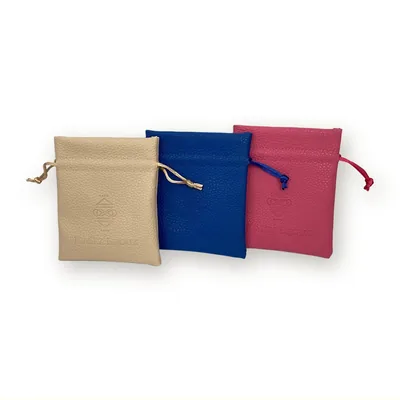
- individual packing: polybag, card, pouch or box;
- inner pack quantity, carton size and gross weight;
- production time and payment terms.
Write the unit into every comparison. Earrings are priced per pair, hair ties per pack, rings often per size run. A price per dozen and a price per piece are easy to confuse once the quotes pile up. For bags, hats and slippers, carton volume matters more than weight, so ask for the carton data before you compare.
4. Sample the way your customers will use the product
Open and close every clasp twenty times. Check that stones sit evenly and that plating has no bare edges or bubbles. Bend an open ring to size and back. Pull on bag handles and look at the stitching where they meet the body. Wear the cap for a day and check the size strap. Put on the slippers and walk on a hard floor. Read the markings inside sunglasses temples.
Keep one approved sample per model and colour as the reference for production and inspection. Our samples page explains how sample costs are credited against the order.
5. Agree terms in writing
The order confirmation should hold the specification, plating colour, packaging, labels, delivery date and quality standard. If your logo goes on a tag, a clasp, a woven label or a gift box, approve a pre-production sample before mass production. A typical split is a deposit of 30–50 % with the balance before shipment.
6. Ask for the compliance data before you pay
For jewellery and metal parts in skin contact, REACH limits nickel release, cadmium and lead. Ask the supplier for test reports per model and plating, and consider a lab test for nickel release to EN 1811 before shipment. For leather wallets, belts and gloves, ask about chromium VI. For sunglasses, ask for the EU declaration of conformity and the filter category. For hats, scarves and slippers, ask for the fibre composition and material data you need for the labels.
7. Inspect before the goods leave
Fixing a problem after arrival is slow and costly. A pre-shipment inspection checks quantity, workmanship, function, packaging and labels on a statistical sample (AQL). For accessories, that means plating colour against the approved sample, loose stones, clasp function, zip and stitching quality, sizes and the text on cards and tags. Pay the balance after you have seen the report. More detail is on our quality page.
8. Choose the transport
Sea freight suits bulky goods such as bags and slippers. Rail is a middle route for mixed orders, and air works for samples and light, urgent goods such as a reorder of earrings. Planning figures are 25–45 days by rail or sea to Poland and 7–12 days by air. Allow for space filling up before the factory holidays in late January–February, which stop production for several weeks.
9. Customs, duty and VAT
The importer of record files the import declaration, pays duty according to the tariff code and pays import VAT. You also need an EORI number. Duty differs between imitation jewellery, leather goods, textile hats and footwear, so check the code for each item before you calculate your margin.
10. Make the product legal to sell
Under the GPSR (Regulation (EU) 2023/988) every consumer product needs an EU economic operator, a name and postal address on the product, its packaging or an accompanying document, a type or batch reference and warnings in the language of the country of sale. For small jewellery, that information usually goes on the card, tag or pouch. Textile items need fibre composition labels, slippers need material labels for upper, lining and sole, and packaging needs registration where producer responsibility schemes apply, such as LUCID in Germany.
Common mistakes buyers make
- Ordering by the photo. Two necklaces with the same picture can differ in base metal, plating and chain thickness. Ask for the specification in writing.
- One colour, one size. Rings and slippers need size runs, and plated jewellery sells across gold-tone, silver-tone and rose-tone. Plan the split before you order.
- Forgetting the display. Loose earrings in polybags need carding before they can go on a stand. Display-ready packaging saves that work in the shop.
- Late private label. Logo work needs artwork approval, a pre-production sample and then production. For spring stock, start by mid-December.
The alternative: buy through an EU importer
If you would rather not be the importer, buy through one. You get an EU invoice, inspected goods, a delivered price and the documents for the products. That is what we do at AccessoriQ. Send us your product list and compare our offer with your own calculation.