Why jewellery gets special attention
Nickel allergy is one of the most common contact allergies in Europe, and jewellery, watch straps and clothing fasteners are typical triggers. Cadmium and lead are toxic metals that were used in cheap alloys and solders because they are easy to cast. The EU addressed all three in REACH, Annex XVII, the list of restrictions on substances in articles.
These rules apply to jewellery placed on the EU market, whoever made it. Market surveillance authorities and customs test samples, and products that fail are withdrawn or recalled. Listings for non-compliant jewellery appear regularly in the EU Safety Gate alerts.
Nickel: a limit on release, not on content
The nickel rule (entry 27 of Annex XVII) does not ban nickel in the alloy. It limits how much nickel a part releases when it is in direct and prolonged contact with skin:
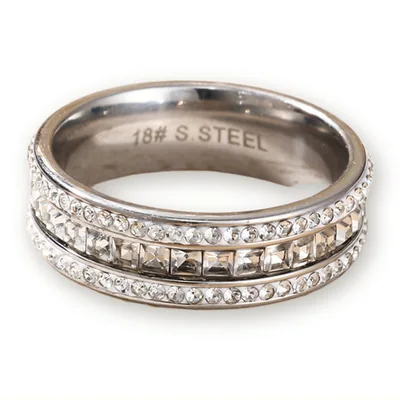
- 0.5 µg/cm² per week for articles in direct and prolonged skin contact, such as necklaces, bracelets, rings, earring backs, watch cases and clasps;
- 0.2 µg/cm² per week for parts inserted into pierced ears or other pierced parts of the body, such as earring posts.
Plated items need extra care. If the plating wears through, a nickel-containing base metal underneath can start to release more. The rule addresses this: a coated part must keep within the limit for at least two years of normal use. The test method simulates that wear before measuring.
What EN 1811 tests
EN 1811 is the reference test method for nickel release. A lab places the part in artificial sweat for a week and measures the nickel that dissolves. For coated items, a wear and abrasion step under EN 12472 comes first. The result is compared with the limit for that type of article.
A report is valid for one model in one material and plating. If the supplier changes the base metal or the plating line, the old report no longer describes the product. Ask for the report date and check that the article on it matches your item.
Cadmium in metal parts
Entry 23 of Annex XVII limits cadmium in metal parts of jewellery, including imitation jewellery and hair accessories, to 0.01 % by weight of the metal. It covers bracelets, necklaces, rings, earrings, brooches, cufflinks, piercing jewellery, watches and wrist-wear. Cadmium can turn up in cheap zinc alloys and solders, so the test is worth requesting for cast items.
Lead in jewellery parts
Entry 63 limits lead in any individual part of jewellery to 0.05 % by weight. There are exemptions, for example crystal glass, some precious and semi-precious stones and enamels. Lead turns up in cast pendants, solder joints and some glass beads, so testing is worth asking for on these items too.
Other substances in accessories
Jewellery is rarely only metal. Consider the other materials as well:
- Leather cords and straps: chromium VI in leather articles in skin contact is limited under REACH. Ask for the test with leather bracelets.
- Plastic and PVC parts: phthalates in plasticised materials are restricted.
- Rubber and soft plastic parts: PAH limits apply to parts in skin contact.
- Dyed textiles: azo dyes that release certain amines are restricted in textile and leather articles in skin contact, which matters for woven friendship bracelets and fabric scrunchies.
What to ask your supplier
When you request a quote for jewellery, add these points:
- Base metal for each part: stainless steel grade, brass, zinc alloy, 925 silver.
- Plating type, colour and, where known, thickness.
- Nickel release reports to EN 1811 per model and plating, with the lab name and date.
- Cadmium and lead test results for cast and soldered parts.
- Confirmation that the reports match the current production.
If a supplier has no reports, a lab test before shipment is possible. We can order an EN 1811 test on the production sample, so you see the result before the balance is paid. Our quality and compliance page explains how we handle this.
What you can claim on the product
Many listings use words that the evidence does not support. Avoid absolute skin-tolerance claims. A report shows that a sample of a model released nickel below the limit. It does not show that no customer will react.
Wording that stays accurate:
- "Nickel release tested to EN 1811" when you have a report for that model;
- "Stainless steel" or "gold-plated brass" as the material, not "gold";
- "Cubic zirconia" or "glass crystal" for stones, never a precious stone name for a simulant.
Plated items are "gold-plated" or "gold-tone". Our earrings and necklaces pages show the material and plating for each model.
The importer's role
Under REACH and the GPSR, the importer is responsible for placing compliant goods on the EU market. If you import yourself, that is you. If you buy from an EU importer such as us, we take that role and you receive the documents we hold for each model. Shops and online sellers still need to keep these on file and pass customer complaints on.
What happens when a product fails
When an authority finds jewellery above a limit, the usual outcome is a withdrawal from sale, sometimes a recall from customers, and an entry in Safety Gate that other countries can see. The authority contacts the business that placed the product on the market, and that business must trace where the goods went. Shops are asked for their supplier and their stock.
The cost is rarely the fine alone. Stock that cannot be sold, refunds, the work of tracing deliveries and the damage to a marketplace account all add up. For an online seller, a withdrawn listing can also mean lost reviews and ranking. A test report that costs a fraction of one order is cheap insurance against this.
Keeping the file
Keep one folder per model with the specification, the approved sample photo, the reports and the order dates they cover. When a model is reordered, check that nothing in the material or plating has changed. If it has, the file needs a new report.
A short checklist
- Is there a nickel release report for this model and plating?
- Does the report date fit the current production?
- Are cast pendants and soldered parts tested for cadmium and lead?
- Are leather, plastic and textile parts covered?
- Do the card or tag and the listing avoid claims you cannot prove?
If you want us to check a range you already sell, send us the list with photos and supplier details.