Why accessories suit marketplaces
Earrings, hair clips, card holders and keychains weigh a few grams, fit into a letterbox parcel and rarely break in transit. Storage costs are low, and one shelf holds hundreds of models. That is why so many sellers start with them.
The downside is visible on every search page: hundreds of near-identical claw clips and hoop earrings at low prices. Selling the same generic item as everyone else turns into a price race. The sellers who do well choose products carefully, bundle them, put their own brand on them and keep the listing data complete.
Which products work
- Hair accessories: claw clips in sets of colours, scrunchie packs, bow clips. Light, cheap to ship, easy to bundle.
- Earring sets: multi-pair sets of studs and huggies on one card. A set has a higher basket value than a single pair.
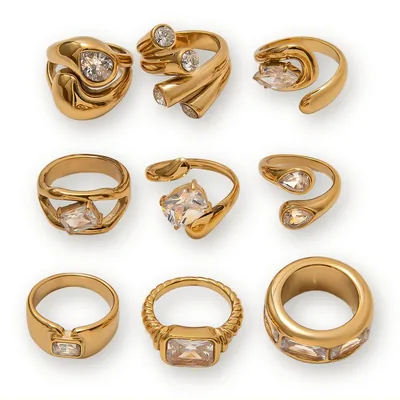
- Stainless steel jewellery: chains, hoops and rings that keep their colour, which means fewer returns and better reviews.
- Card holders and slim wallets: clear specifications such as card slots, RFID lining where stated and dimensions make them easy to compare.
- Bag charms and keychains: strong for gifting and seasonal ranges.
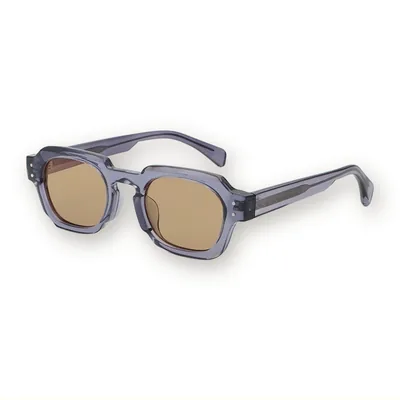
- Sunglasses: high seasonal demand, but the CE documents and filter category must be complete before listing.
Bulky items such as slippers and handbags sell well too, but storage and shipping fees take a larger share of the price. Calculate the fees before you choose them.
Sets and bundles
Bundling is the simplest way out of the price race. A set of four claw clips in coordinated colours, a gift box with a necklace and matching earrings, or a scrunchie pack in seasonal shades is harder to compare directly with a single item. It also raises the order value, which helps against fixed shipping and fulfilment fees.
Bundles need their own packaging and their own EAN. Plan them with the supplier before production, so the set arrives packed and labelled rather than assembled by hand in your warehouse. Our display-ready packaging covers sets on cards and in boxes.
Your own brand
Marketplaces reward brands. On Amazon, Brand Registry requires a registered trade mark and gives you more control over your listings and content. On other platforms, a brand name on the product and packaging protects your listing from other sellers attaching to it.
Private label in accessories can start small: your logo on the card, tag or box, then a logo tag on necklaces or embroidery on caps for your best sellers. Our private label page explains the steps and the minimum of 300 pieces per model.
Photos and product data
Customers cannot touch the product, so the listing must answer their questions:
- Material: stainless steel, gold-plated brass, acetate, PU, genuine leather where confirmed.
- Size: chain length and width, hoop diameter, ring size with inner diameter, clip length, wallet dimensions, slipper size runs.
- Closure: lobster clasp, hinged hoop, butterfly back, zip, snap.
- Colour: gold-tone, silver-tone, with photos of each.
- Contents of a set: number of pieces and what is included.
Photograph jewellery on a model or at least next to an object that shows scale. A hoop that looks large on a white background may be 12 mm. Many returns in accessories come from size expectations.
Words to avoid in listings
Marketplace keyword habits lead to claims that break the rules or the platform policy:
- do not use luxury brand names or phrases that suggest a copy;
- do not call plated items "gold" or "silver", use "gold-plated" or "gold-tone";
- do not name stones as precious stones when they are cubic zirconia or glass;
- do not make skin-tolerance or health claims you cannot prove with reports;
- do not write "polarised" or extend UV claims beyond what the product data states.
Listings with such words are removed regularly, and repeat cases can affect the seller account.
GPSR data in every listing
Under the GPSR, online listings must show the manufacturer's name and address, the EU responsible person where relevant, a picture and identification of the product, and warnings or safety information in the language of the country. Amazon, Allegro and eBay ask for this data in the listing form. Missing data can block a listing.
If you buy from an EU importer, the importer's details serve as the EU economic operator. Keep the documents for each model on file: nickel release reports for jewellery, the declaration of conformity for sunglasses, fibre and material labels for textiles and slippers.
Selling in several countries
Pan-European selling multiplies the language work. Warnings, textile labels and user information for sunglasses must be in the language of each country. Product cards printed in several languages are cheaper than relabelling later. Check packaging EPR registration as well, for example LUCID in Germany, which marketplaces verify for sellers shipping there.
A note on handmade platforms
Some platforms focus on handmade or own-designed items and restrict resold factory products. Check the platform's rules before listing catalogue goods. Own designs produced with a production partner are often allowed when declared correctly.
Returns and reviews
In accessories, a few bad reviews can stop a listing. The usual reasons are predictable: plating that darkens, a clasp that breaks, a size that differs from the photo, a colour that looks different in reality. Most of these are decided at the sampling stage, not in customer service.
- Test samples for wear before ordering in volume.
- Prefer lobster clasps and stainless steel for everyday pieces.
- Show sizes in every main photo, not only in the text.
- Photograph the delivered goods, not only the supplier's images, so the colour matches.
- Read the first reviews of a new product closely and adjust the next order.
A short card in the parcel with care advice for plated jewellery also reduces complaints.
Calculating the margin
Put every cost into one line per product: purchase price, freight, duty and VAT if you import, packaging, marketplace commission, fulfilment and storage fees, advertising and an allowance for returns. For accessories, advertising and returns often decide the result more than the purchase price. Our pricing page shows how unit prices fall with quantity, and the page for online sellers explains how we supply goods ready for marketplaces.