What private label means in accessories
Private label means a catalogue product, or a variation of it, sold under your brand. The factory makes the item, and your logo, colours and packaging turn it into your product. For accessory brands, online sellers and boutiques with their own name, it is the step from reselling to building a range that customers remember.
There are three levels:
- Packaging only. The standard product on your printed card, tag, pouch or box. The fastest route and the lowest minimum.
- Logo on the product. A stamped tag on a necklace, an engraved clasp, an embossed wallet, a woven label in a beanie.
- Own specification. Your own plating colour, chain length, stone colour, leather colour or fabric, combined with your logo and packaging.
Each level adds approvals and time. Many brands start at level one, see what sells and move up for their best sellers.
Logo methods by product type
| Product | Usual logo methods |
|---|---|
| Necklaces, bracelets | Stamped or laser-engraved logo tag near the clasp, engraved clasp |
| Rings | Laser engraving inside the band |
| Charms and keychains | Enamel logo, engraved or stamped metal part, printed resin |
| Wallets, card holders, bags | Embossed or debossed logo, metal logo plate, printed lining |
| Belts | Engraved buckle, embossed leather near the buckle |
| Caps, beanies, bucket hats | Embroidery, woven label, leather or PU patch |
| Scarves, slippers | Woven label, printed care label, embroidery |
| Hair clips, scrunchies | Printed card, small metal logo plate, woven label |
Engraving on small jewellery has limits. A logo on a 6 mm tag must stay readable at that size, so fine lines and small text often disappear. Send the logo as vector artwork and ask for a digital proof at actual size.
Plating colours and colour matching
Plated jewellery usually comes in gold-tone, silver-tone and rose-tone, sometimes also in gunmetal or black. The shade of gold-tone varies between plating lines. If your range is built across several suppliers, ask for plated swatches and approve one reference shade, then hold every factory to it.
For leather and PU goods, colours are matched to a swatch or a Pantone reference. For knitwear, yarn is dyed in lots, and small shade differences between lots are normal. Agree the tolerance before production.
Remember that plating colour does not change the compliance data. Each plating on each model still needs its own nickel release data. Our quality page covers the reports we request.
Display cards, tags and boxes
In accessories, the packaging often decides the sale. An earring on a well-printed card, hung on a stand, sells better than the same earring in a drawer. The usual formats:
- Earring and hair-clip cards with a hang hole, your logo and the price field.
- Hang tags with EAN, model and the GPSR data, for bags, hats, scarves and slippers.
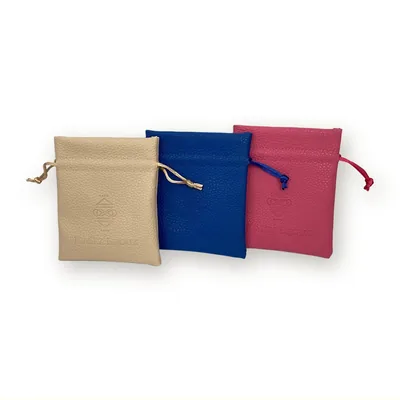
- Pouches in velvet, cotton or microfibre for jewellery and sunglasses.
- Gift boxes for rings, necklaces and bracelets, for gifting peaks.
- Counter displays filled with an assortment, ready to put next to the till.
The card is also where the legal data goes on small jewellery. Under the GPSR, the importer's name, postal and e-mail address, a type or batch reference and any warnings must be on the product, its packaging or an accompanying document. Design that space in from the start. Our display-ready packaging page shows formats and options.
EAN codes and multilingual labels
Retail chains and marketplaces need an EAN for each sellable unit, which in jewellery often means each model in each plating colour, and in rings and slippers each size. You can use your own GS1 codes or ask us to add them. Plan the label language for every country you sell in: textile fibre composition, slipper material labels and warnings must be in the local language.
Minimums and costs
Private label minimums are usually per model, and often per colour. Our planning minimum is 300 pieces per model. Packaging-only projects can start lower, while own colours and plating usually need more, because the factory sets up a separate production run.
Costs you should expect to see in the offer:
- a one-off cost for an engraving plate, embossing die or embroidery set-up;
- printing plates or set-up for cards, tags and boxes;
- a pre-production sample;
- optional lab tests per model and plating.
Set-up costs are paid once and reused on reorders, so the unit cost falls with every repeat.
Timing
A private label order follows the same steps every time: artwork, digital proof, pre-production sample, your approval, production, inspection and transport. Production is 25–45 days after approval, plus 25–45 days of rail or sea transport. For spring stock, start by mid-December so production finishes before the factory holidays in late January–February. For Christmas, start by June.
Design and legal limits
Private label is your brand on a product, so the product must be clear of other people's rights. We do not make copies of brands or recognisable designs and logos of other houses. Keep your range on generic shapes, such as hoops, chains, claw clips and baseball caps, and make it yours through details, colours and packaging.
Do not market jewellery or hair clips to young children. Small parts and the toy rules make that a different product category. Plush bag charms that may appeal to children are checked per item.
Common mistakes in private label
- Too many models at once. Each model carries its own minimum and set-up. Ten models with your logo tie up far more cash than three.
- Approving from a screen. Plating shades and leather colours look different on a monitor. Approve physical swatches and a pre-production sample.
- No space for legal text. A beautiful card with no room for the importer address and batch reference has to be reprinted.
- One language only. If you sell in several countries, plan multilingual cards and labels before printing.
- Forgetting reorders. Keep the artwork, the approved sample and the specification in one file, so the second order matches the first.
Getting started
Pick three to five models that already sell well, decide the logo method and the packaging, and ask for an offer with set-up costs shown separately. Our private label page describes the process in full, and the quote form takes your list and artwork.