Sunglasses are PPE category I
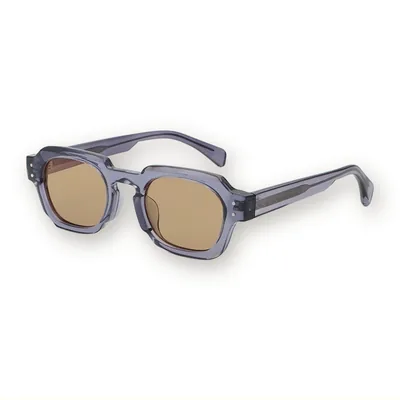
Sunglasses for general use fall under the Personal Protective Equipment Regulation (EU) 2016/425. They protect the eyes from sunlight that is not extreme, which places them in category I, the simplest risk class. Category I allows the manufacturer to assess conformity itself through internal production control, without a notified body. The result must still be documented.
What that means in practice:
- the sunglasses carry the CE marking;
- there is an EU declaration of conformity for the model;
- there is technical documentation, usually with test reports against EN ISO 12312-1;
- the frame or packaging shows the manufacturer's and the importer's name and contact address;
- user information comes with each pair in the language of the country of sale.
Prescription and optical glasses are medical devices under a different regulation. They are not part of our range, and sunglasses should not be sold as a replacement for them.
The standard: EN ISO 12312-1
EN ISO 12312-1 covers sunglasses and sunglare filters for general use. It sets requirements for the filters, for example luminous transmittance, UV transmittance, colour recognition for road use and optical quality, and for the frame, for example robustness and flammability. A test lab measures a sample against these requirements and issues a report. That report is the base of the declaration of conformity.
Filter categories 0 to 4
Every sunglass filter is placed in a category by how much visible light it lets through.
| Category | Light transmitted | Typical use |
|---|---|---|
| 0 | 80–100 % | Clear or very light tint, comfort and fashion |
| 1 | 43–80 % | Light tint, low sunlight |
| 2 | 18–43 % | Medium tint, everyday summer use |
| 3 | 8–18 % | Dark tint, strong sunlight, beach |
| 4 | 3–8 % | Very dark, mountains and glaciers |
Most fashion sunglasses are category 2 or 3. Category 4 lenses are not suitable for driving, and the frame or the user information must say so. Lighter filters that let through less than 75 % of light need a warning that they are not suitable for driving at twilight or at night. Gradient lenses are categorised at their reference point, so the label must reflect the measured value.
The category number is usually printed on the inside of a temple together with the CE marking and a model reference. Check it on samples: the marking should match the declaration and the test report.
UV400 and polarised: what the words mean
"UV400" is a market term for lenses that block ultraviolet light up to a wavelength of 400 nm. It is a useful selling point, but it is not a filter category and it does not replace the CE documentation. Use it only where the supplier's data supports it, and do not turn it into absolute protection claims.
"Polarised" describes a filter that cuts reflected glare from water, snow and roads. It is a separate property. A polarised lens has a filter category like any other. Only call a model polarised where the product card and the supplier confirm it. A simple check on samples: look at a phone screen through the lens and rotate it, and a polarised lens darkens the screen at one angle.
What goes on the frame, the box and the leaflet
Plan the marking and packaging before production, not after arrival.
- On the frame: CE marking, filter category, a model or type reference, and the manufacturer's identification.
- On the frame, case or packaging: the name, registered trade name or mark and postal address of the manufacturer and the importer.
- In the user information: the filter category and its meaning, any driving warning, cleaning and storage advice, the standard used, and a reference to the declaration of conformity or where to find it.
The user information must be in the language of each country of sale. A shop selling in Germany and Austria needs German, a seller covering Poland, France and Italy needs all three. A multilingual leaflet or tag is usually the simplest answer. Under the GPSR, the same safety information must also appear in online listings.
What to check on samples
- Compare the temple marking with the declaration of conformity and the test report.
- Check that the lens tint looks like the stated category. A very dark lens marked category 2 is a warning sign.
- Look through the lens at straight lines for distortion.
- Open and close the hinges, and check that screws and hinge springs hold.
- Check the case or pouch and cleaning cloth if they are part of the offer.
Common mistakes with sunglasses
- Relying on a sticker. A UV400 sticker on the lens is not documentation. Without a declaration of conformity and a test report, the product is not ready for the EU market.
- One report for all colours. A brown gradient and a black lens on the same frame can fall into different categories. Each lens variant needs its data.
- Missing importer data. Many factory samples carry only the factory's mark. The importer's name and address must be added on the frame, case, packaging or an accompanying document.
- Leaflets in one language. English-only user information is not enough in most EU countries.
- Overstated claims. Words such as "full protection" or "blocks all harmful rays" go beyond what a filter category states. Stick to the category, UV400 where supported and polarised where confirmed.
If you already stock sunglasses and are not sure the documents are complete, send us the model list and we check what is missing.
Display and packaging
Opticians and boutiques usually sell sunglasses from a stand. Each pair needs a hang tag or a small card with the price, the filter category and the importer data, so the information reaches the customer without the box. A rotating sunglasses stand from our displays range holds a mixed assortment on a small footprint.
Buying for a shop or chain
A practical starting assortment has four to six shapes, such as cat-eye, round, square, aviator and a sport-style model, each in two or three colours. Ask for the filter category and the documents for each model and colour, because a different lens tint can mean a different category.
Our sunglasses catalogue shows shape, frame and lens material, filter category and the polarised option where it exists. For shops that sell eyewear daily, our page for opticians and eyewear shops describes how we supply the documents with each order.