Why materials decide price and returns
In costume jewellery, the base metal and the finish decide how long a piece keeps its colour, how it behaves on skin and how many customers come back with a complaint. A cheap ring that darkens in two weeks costs more in returns and reviews than it saved at purchase. A clear specification is the first step to a fair comparison.
Base metals
| Material | Typical use | What to know |
|---|---|---|
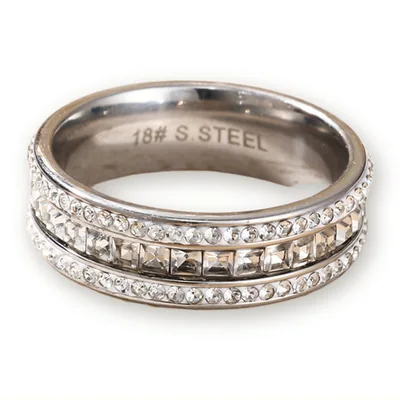
| Stainless steel (often 304 or 316L) | Chains, hoops, huggies, rings, bracelets | Durable, keeps shape, resists tarnish. Grades differ, so ask which one. |
| Brass | Plated earrings, pendants, rings, charms | Easy to shape and plate. Needs a good plating and often a barrier layer. |
| Zinc alloy | Cast pendants, statement earrings, charms, keychains | Low cost, detailed castings. Ask for cadmium and lead data. |
| 925 silver | A few rings, studs, small pendants | Sterling silver. Can tarnish, often rhodium- or gold-plated. |
| Copper | Wire, some bracelets | Can mark the skin if uncoated. |
Stainless steel has become the base of many everyday ranges because it holds up well under daily wear. It is harder to cast in fine detail than brass or zinc alloy, so statement designs often use the softer metals.
Plating types
"Gold-plated" covers very different processes:
- Electroplating deposits a thin metal layer in a bath. Thickness varies widely, and a thin flash plating can wear through quickly on rings and bracelets.
- PVD (physical vapour deposition) applies a hard coating in a vacuum. It is common on stainless steel and usually resists wear better than a thin electroplated layer.
- Ion or vacuum plating is a related family of processes, often used for gold-tone and black finishes on steel.
Ask for the process and, where the supplier states it, the thickness in microns. If there is no figure, ask for the plating standard the factory works to and compare samples after wear.
Some plated items get a clear lacquer or anti-tarnish coating. It helps against discolouration but wears off in time. On samples, rub a ring against fabric for a few minutes and check the edges, where wear starts first.
Colour names to use
Name colours by appearance and process, not by precious metal. Use "gold-plated", "gold-tone", "silver-tone", "rose gold-tone" or "rhodium-plated". The words "gold" or "silver" on their own suggest a precious metal and are misleading on a plated brass item. A 925 silver ring can be described as sterling silver. Do not promise hallmarking.
Stones, pearls and enamel
- Cubic zirconia is the usual clear stone in rings, studs and tennis bracelets. Describe it as cubic zirconia, never with a precious stone name.
- Glass and crystal are used for coloured stones and beads. Crystal glass may contain lead; it is exempt from the lead limit for jewellery, but should be described honestly.
- Moissanite appears in a few higher-priced items and must be named as such.
- Pearls in costume jewellery are often glass or shell pearls. Describe them as stated by the supplier.
- Enamel is used for charms, brooches and initials. Check that the colour fill is even and stays inside the lines.
Check stone setting on samples. Prong-set stones should not move. Glued stones should not show glue at the edges, and they should stay in place after you tap the piece on a table.
Clasps, closures and findings
Most complaints in jewellery are not about the main piece but about the small parts.
- Lobster clasps are reliable on necklaces and bracelets. Spring rings are cheaper and weaker.
- Earring posts and backs touch pierced skin. The stricter nickel limit applies to the post, so ask for data on the post material.
- Hinged hoops and huggies should click closed and stay closed.
- Extension chains on necklaces and bracelets reduce size complaints.
- Jump rings should be closed tightly. Soldered jump rings are stronger on heavier pieces.
Chain types and sizes
For chains, ask for the type, width and length. Common types are cable, rope, Figaro, snake and box. Width in millimetres changes the look and the price more than most buyers expect. Standard lengths for necklaces run around 40–45 cm with an extension, longer for layering pieces. Write all three values on the order.
Rings and size runs
Rings are sold in sizes, and European, UK and US size systems differ. Ask the supplier for the inner diameter or circumference for each size and convert to the system your customers use. Open adjustable rings avoid size runs and are popular with shops that have little stock space. For closed rings, plan a size run per model rather than a single size.
A simple wear test on samples
Lab reports tell you about substances. They do not tell you how a piece looks after a month in a customer's bag. A few simple checks on samples help:
- Wear a ring and a bracelet for a week, including hand washing.
- Leave a necklace in a damp bathroom for a few days and compare it with an unworn sample.
- Open and close the clasp many times and check the spring.
- Bend the ear post gently and check that it returns straight.
- Rub plated edges against denim and look for the base metal showing.
Keep the worn sample next to the reference sample. When production arrives, compare both with the delivered goods.
Packing that protects the finish
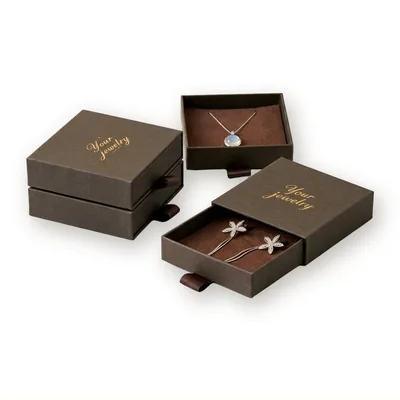
Air and moisture speed up tarnish on silver and on thinly plated pieces. Individual polybags, ideally resealable, slow it down. Anti-tarnish strips in the carton help for sterling silver. Chains should be packed so they do not knot, for example on a card or with the clasp fixed. Gift boxes with an insert keep pieces in place in transport and in the shop. These choices cost little at the factory and save time in the shop.
How to write a specification
A complete line in your request looks like this: model, base metal and grade, plating process and colour, thickness if known, stone type and colour, clasp type, length or size, individual packing, price per piece and MOQ. Send the same line to every supplier, and the offers become comparable.
Our catalogue pages for necklaces, rings and bracelets show these details per model, and our pricing page explains how the indicative from prices relate to quantity and plating colour.